
Pressure Washer
Pressure Washer
Corded Electrical Pressure Washer Products

How do I set up and start my Pressure Washer
Quick Answer
Before using your pressure washer, connect the water supply, high-pressure hose, and spray gun, then turn on the water before switching on the machine. If the pressure washer does not produce pressure immediately, you may need to remove an airlock by allowing water to flow through the system before starting.
Tip: Always turn the water supply on before switching on the pressure washer. Running the machine without water can damage the pump.
Before You Begin
Before setting up your pressure washer:
- Read and understand the user manual.
- Position the pressure washer on a stable, level surface.
- Check that all hoses and accessories are free from damage.
- Ensure the power cable and plug are in good condition.
- Make sure your water supply provides sufficient flow.
Important: Never operate the pressure washer without a connected water supply.
How to Set Up Your Pressure Washer
1. Connect the Water Inlet
Attach the hose connector (male inlet connector) to the water inlet on the pressure washer.
The inlet is usually located on the front of the machine, although the location may vary depending on the model.
Refer to your user manual if you are unsure.
2. Connect the High-Pressure Hose
Attach the high-pressure hose to your pressure washer.
Depending on your model, the hose may connect to:
- The hose reel.
- The high-pressure outlet on the main body of the machine.
Ensure the connection is fully tightened and secure.
[Insert image of high-pressure hose connection]
3. Assemble the Spray Gun
Assemble your chosen accessory, such as:
- Spray gun.
- Lance.
- Nozzle.
- Patio cleaner.
Most accessories use a push-and-twist (bayonet) fitting.
Ensure each attachment locks securely into place.
[Insert image of spray gun assembly]
4. Connect the Garden Hose
Attach your garden hose to the water inlet using a suitable quick-connect coupler (normally supplied separately).
Turn the outdoor tap on fully.
Check for leaks around all hose connections.
5. Connect the Power Supply
Plug the pressure washer into a suitable mains socket.
If using an extension lead, ensure it is suitable for outdoor use and fully unwound.
6. Start the Pressure Washer
Once the water is flowing:
- Turn the water supply on fully.
- Switch the pressure washer ON.
- Squeeze the trigger on the spray gun to begin washing.
The pressure washer will now begin delivering high-pressure water.
How to Clear an Airlock
If your pressure washer runs but does not produce pressure, an airlock may be preventing water from reaching the pump.
To remove an airlock:
- Leave the pressure washer switched OFF.
- Turn the water supply ON.
- Point the spray gun in a safe direction.
- Pull and hold the trigger.
- Allow water to flow steadily through the spray gun until all air has escaped.
- Once the water flows smoothly without spluttering, switch the pressure washer ON.
This allows the pump to fill with water before starting.
Tip: Airlocks commonly occur after the machine has been stored or when connecting it for the first time.
My Pressure Washer Still Won't Work
If the machine still does not operate correctly:
- Check the water supply is fully turned on.
- Ensure all hose connections are secure.
- Confirm the spray gun and lance are assembled correctly.
- Remove any airlocks using the steps above.
- Check the mains power supply and any extension leads.
If the problem continues, please contact our Customer Support team for further assistance.
Frequently Asked Questions
Why should I turn the water on before starting the pressure washer?
The pump relies on a continuous water supply for lubrication and cooling. Running the machine without water can damage the pump.
Why is my pressure washer running but not producing pressure?
The most common causes are an airlock, an incorrectly connected hose, or an insufficient water supply.
How do I know if there is an airlock?
If water splutters from the spray gun or no pressure is produced when the machine starts, an airlock is likely. Follow the airlock removal steps above.
Can I use any garden hose?
Yes, provided it is compatible with your pressure washer's inlet connector and can supply an adequate flow of water.
Do I need to connect all accessories before switching on?
Yes. Always assemble and securely connect the spray gun, lance, nozzle, and hoses before turning on the water supply or powering on the machine.
View Article
My Pressure Washer is losing water pressure
Quick Answer
If your pressure washer has low or fluctuating water pressure, the most common causes are air trapped in the system, leaks in the hose or attachments, or blockages in the spray gun or nozzle. Following the checks below will often restore normal pressure.
Tip: If you've recently connected your pressure washer or haven't used it for a while, perform a line purge to remove trapped air before using the machine.
Before You Begin
For your safety:
- Switch the pressure washer OFF.
- Disconnect it from the mains power supply (or remove the battery on cordless models).
- Turn off the water supply before disconnecting any hoses.
- Never inspect hoses or fittings while the system is pressurised.
1. Check for Leaks
Inspect the entire pressure washer system for water leaks.
Check:
- The garden hose connection.
- The high-pressure hose.
- The spray gun.
- The lance and nozzle.
- Any quick-connect fittings.
If water is leaking from any connection, tighten it securely or replace any damaged components.
Important: Even a small leak can reduce water pressure significantly.
2. Check for Blockages
Inspect the spray gun, lance and nozzle for debris or blockages.
Blocked nozzles can restrict water flow and reduce cleaning performance.
If necessary:
- Remove the nozzle.
- Clean away any dirt or debris.
- Refit the nozzle securely.
3. Purge the System (Remove Airlocks)
Air trapped inside the pressure washer can reduce or interrupt water flow.
Follow the steps below to purge the system.
Step 1
Switch the pressure washer OFF and disconnect it from the mains power supply.
Step 2
Turn OFF the water supply.
Step 3
Disconnect the spray gun or lance from the high-pressure hose.
Step 4
Turn the water supply ON.
Allow water to flow freely through the machine and out of the hose for 10–15 seconds.
This helps remove trapped air and flush out any debris.
Step 5
Turn the water supply OFF.
Reconnect the spray gun or lance.
Step 6
Reconnect the pressure washer to the mains power supply.
Turn the water supply ON again.
Point the spray gun in a safe direction and squeeze the trigger to allow water to flow through the system.
Step 7
Switch the pressure washer ON.
The machine should now build pressure normally.
Cordless Pressure Washers
If you are using a cordless pressure washer:
After switching the machine on, allow 10–15 seconds for the pump to draw water from the bucket or external water source.
This is normal and does not indicate a fault.
My Pressure Washer Still Has Low Pressure
If the pressure has not improved:
- Check the water supply is fully turned on.
- Inspect all hoses for leaks or damage.
- Ensure the nozzle is clean.
- Repeat the line purge procedure.
- Confirm the inlet filter is clean and free from debris.
If the problem persists, please contact our Customer Support team for further assistance.
Frequently Asked Questions
Why has my pressure washer suddenly lost pressure?
The most common causes are trapped air, a blocked nozzle, leaking hose connections or an inadequate water supply.
What is a line purge?
A line purge removes trapped air and debris from the pressure washer by allowing water to flow through the machine before it is switched on.
Why is my cordless pressure washer slow to build pressure?
Cordless pressure washers require a few seconds to draw water from the external water source. Allow 10–15 seconds before expecting full pressure.
Can a leaking hose reduce pressure?
Yes. Any leak in the high-pressure system will reduce the pressure delivered to the spray gun.
What should I do if the pressure still doesn't return?
Check for leaks, clean the nozzle, inspect the inlet filter and repeat the line purge. If the issue continues, contact our Customer Support team.
My Pressure Washer has no power to the unit
Quick Answer
If your pressure washer has no power, first check that it is plugged into a working mains socket, inspect the plug and fuse, and ensure the power cable is undamaged. For cordless pressure washers, check that the battery is fully charged and correctly installed.
Tip: Testing the machine in a different mains socket is one of the quickest ways to determine whether the issue is with the pressure washer or the electrical supply.
Before You Begin
For your safety:
- Switch the pressure washer OFF.
- Disconnect it from the mains power supply (or remove the battery on cordless models).
- Never inspect electrical components while the machine is connected to the power supply.
Warning: If you are unsure about working with electrical equipment, consult a qualified electrician. Never attempt repairs beyond your level of competence.
Mains Powered Pressure Washers
1. Test a Different Power Socket
Unplug the pressure washer from the current socket.
Connect it to a different, known working mains socket.
If the machine operates normally, the original socket or electrical circuit may be faulty.
If you suspect a fault with your household wiring, contact a qualified electrician.
2. Check the Power Cable
Inspect the power cable and plug for:
- Cuts or damage.
- Exposed wires.
- Burn marks.
- Loose connections.
Do not use the pressure washer if the power cable is damaged.
3. Check the Plug Fuse
If the machine still has no power, inspect the fuse fitted inside the mains plug (where applicable).
Replace the fuse only with one of the correct type and rating specified in your user manual.
Important: If the replacement fuse blows immediately, discontinue use and contact Customer Support.
Cordless Pressure Washers
If you are using a cordless pressure washer:
Check the Battery Charge
Ensure the battery is fully charged.
Press the battery charge indicator button.
A fully charged battery will normally display three green LEDs (depending on the battery model).
Recharge the Battery
If the battery level is low:
- Recharge the battery using the supplied charger.
- Wait until charging is complete before using the pressure washer.
Important: Do not continue using the pressure washer once the battery power begins to reduce, as this may affect performance.
Check the Battery Fitment
Ensure the battery is:
- Fully inserted into the machine.
- Securely locked into position.
- Free from dirt or debris on the battery terminals.
My Pressure Washer Still Has No Power
If the machine still does not power on after completing these checks:
- Test another mains socket (corded models).
- Inspect the power cable.
- Check the plug fuse.
- Fully charge and correctly install the battery (cordless models).
If the problem persists, please contact our Customer Support team for further assistance.
Frequently Asked Questions
Why won't my pressure washer switch on?
The most common causes are a faulty mains socket, a blown plug fuse, a damaged power cable, or a discharged battery on cordless models.
How do I know if my battery is charged?
Press the battery indicator button. A fully charged battery will normally display all three green indicator lights.
Can I continue using the cordless pressure washer when the battery is low?
No. Recharge the battery as soon as performance begins to decrease. Continuing to use a low battery may reduce efficiency.
What should I do if the fuse keeps blowing?
Stop using the pressure washer. Repeatedly blown fuses may indicate an electrical fault that requires further investigation.
My machine still has no power after trying another socket. What should I do?
Inspect the fuse, power cable or battery, depending on your model. If the issue remains unresolved, contact our Customer Support team for further assistance.
How do I use the detergent on my Pressure Washer
Quick Answer
Most pressure washers can apply detergent using either a detergent bottle attached to the spray gun or a built-in detergent tank. Depending on your model, detergent is only dispensed when the variable pressure nozzle is set to the low-pressure setting.
Tip: Only use detergents specifically designed for pressure washers. Using unsuitable cleaning chemicals may damage your machine and could invalidate your warranty.
Before You Begin
Before using detergent:
- Read and understand your product manual.
- Only use detergents recommended for pressure washers.
- Wear appropriate personal protective equipment (PPE), including gloves and eye protection.
- Avoid contact with skin, eyes and clothing.
Warning: Detergents can cause irritation or burns. If detergent comes into contact with your skin or eyes, rinse immediately with plenty of clean water. Seek medical advice if irritation persists, and have the product container or label available.
Which Detergent System Does My Pressure Washer Use?
Pressure washers generally use one of the following detergent systems:
- Detergent bottle attached to the spray gun
- Built-in detergent tank
Refer to your user manual if you are unsure which system your model uses.
Option 1: Using a Detergent Bottle Attached to the Spray Gun
The following models use a detergent bottle that attaches directly to the spray gun:
- Qualcast Q1W-SP09-1450
- Spear & Jackson Q1W-SP09-1450
- McGregor MPW1470
- Most cordless pressure washers
How to Use the Detergent Bottle
- Prepare your detergent solution according to the detergent manufacturer's instructions.
- Unscrew the detergent bottle cap.
- Fill the bottle with the diluted detergent solution.
- Securely tighten the cap.
- Attach the detergent bottle to the spray gun.
- Turn on the pressure washer.
- Pull the trigger to begin applying detergent.
The detergent will automatically mix with the water as you spray.
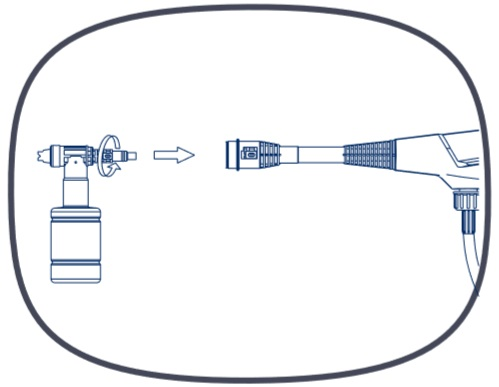
Applying Detergent
For best cleaning results:
- Apply detergent to a dry surface.
- Work from the bottom upwards.
- Allow the detergent to work for the recommended time.
- Do not allow the detergent to dry on the surface.
Rinsing
After cleaning:
- Switch to clean water.
- Rinse using high pressure.
- On vertical surfaces, rinse from the bottom upwards, then finish from the top down to help prevent streaking.
- Hold the nozzle approximately 15–20 cm (6–8 inches) from the surface at roughly a 45° angle.
Option 2: Using a Built-In Detergent Tank
Many pressure washer models feature an integrated detergent tank.
Filling the Detergent Tank
- Prepare the cleaning solution.
- Engage the spray gun safety lock.
- Remove the detergent tank cap.
- Pull out the detergent feed hose if fitted.
- Fill the tank with the diluted detergent solution.
- Refit the hose and securely replace the cap.
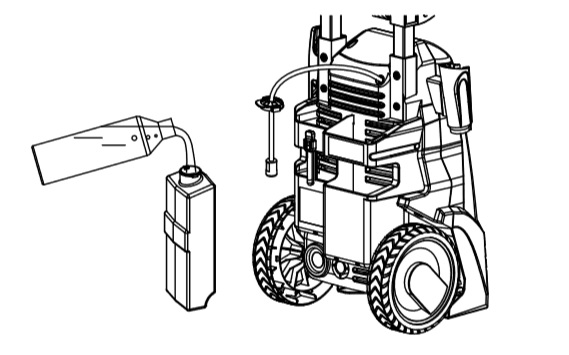
Applying Detergent
To dispense detergent:
- Fit the variable pressure nozzle to the spray gun.
- Set the nozzle to the lowest pressure setting.
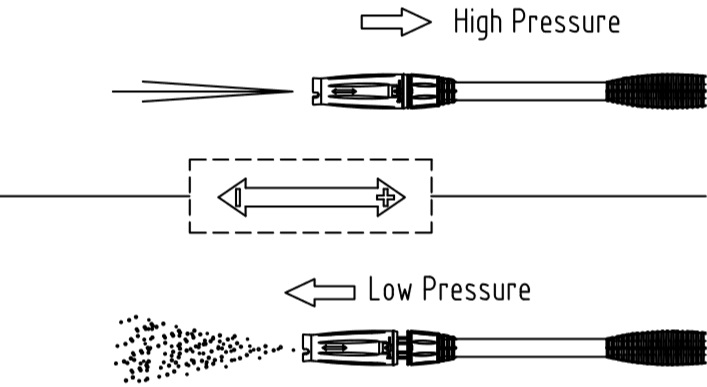
Depending on your model:
- Twist the nozzle to the low-pressure position, or
- Pull the nozzle forwards into the low-pressure position.
Important: Detergent will only be drawn through the machine when the variable pressure nozzle is set to the low-pressure setting.
- Release the safety lock.
- Pull the trigger to begin applying detergent.
Tips for Best Results
- Always dilute detergent as instructed by the detergent manufacturer.
- Only use pressure washer-approved detergents.
- Never use bleach, acids or corrosive cleaning chemicals.
- Rinse the detergent system with clean water after use to prevent residue build-up.
Frequently Asked Questions
Why isn't my pressure washer dispensing detergent?
The most common reason is that the variable pressure nozzle is not set to the low-pressure setting. Also check that the detergent tank or bottle contains diluted detergent and that the feed hose is not blocked.
Can I use washing-up liquid or household cleaners?
No. Only use detergents specifically designed for pressure washers. Household cleaning products can damage seals, pumps and internal components.
Why should I apply detergent to a dry surface?
Applying detergent to a dry surface allows it to cling more effectively and improves cleaning performance.
Can I use detergent with every nozzle?
No. On most models, detergent is only drawn through the machine when using the variable pressure nozzle set to its lowest pressure setting.
Should I flush the detergent system after use?
Yes. Running clean water through the detergent system after use helps prevent blockages and prolongs the life of your pressure washer.
My Pressure Washer is missing the nozzle pin
Quick Answer
If you cannot find the nozzle cleaning pin for your pressure washer, don’t worry — it is already stored on the machine itself and not supplied as a loose part in the box.
Check the side or rear of the unit, where it is usually clipped into a small holder. The pin is very small (around the size of a postage stamp) and can be easy to miss.
Tip: On cordless models, a separate loose nozzle pin is typically not included, as maintenance tools are integrated into the machine design.
Before You Start
Before checking or cleaning your pressure washer, make sure:
- The machine is switched off and disconnected from power or battery
- The lance is not under pressure
- The unit has cooled if recently used
Always:
- Wear suitable PPE if handling blocked nozzles
- Keep water away from electrical components
- Ensure the machine is on a stable surface
Important: Never attempt to clear a nozzle while the trigger is engaged or the machine is pressurised.
Where to Find the Nozzle Cleaning Pin
Follow these steps to locate it:
1. Check the side of the machine
Look along the main body for a small clip or storage slot.
2. Check the rear of the unit
Some models store the pin near the battery compartment or hose holder.
3. Look near the lance or accessory holder
It may be integrated into the accessory storage point.
Tip: The pin is very small, so use good lighting when checking the unit.
Important Information About Cordless Pressure Washers
- Cordless pressure washers are not supplied with a separate nozzle cleaning pin in the box
- The cleaning pin is typically pre-fitted to the machine
- Some models may not include a removable pin at all, depending on design
How to Clean a Blocked Nozzle
If your nozzle is blocked or performance is reduced:
- Switch off and disconnect the machine
- Remove the nozzle from the lance
- Use the onboard cleaning pin to gently clear debris
- Rinse the nozzle with clean fresh water
- Refit and test the spray pattern
Important: Do not force the pin into the nozzle, as this may cause damage.
Water Source Guidance (Important Maintenance Advice)
If you use:
- Saltwater
- Pond, lake, or stream water
You must:
- Flush the machine thoroughly with fresh water immediately after use
This helps to:
- Prevent internal corrosion
- Reduce nozzle blockages
- Extend the life of the pump and seals
My Nozzle Pin Is Still Missing
If you still cannot locate the nozzle cleaning pin, check:
- All accessory storage points on the machine
- The underside of the unit
- The user manual diagram for your specific model
- Packaging inserts (for any model variations)
If it is still not found, it may be:
- Stored in a different position depending on model revision
- Not included as a separate component on your specific unit
Frequently Asked Questions
Why can’t I find the nozzle cleaning pin in the box?
Because it is usually pre-attached to the pressure washer, not supplied separately.
Do all pressure washers come with a nozzle cleaning pin?
No. Some models include a built-in pin, while others (especially cordless models) do not include a separate loose accessory.
Where is the nozzle pin usually stored?
Most commonly on the side or rear of the machine, clipped into a small holder.
Can I still use the pressure washer without the pin?
Yes, but you will need to ensure nozzles are cleaned using suitable alternative methods or replacement accessories if required.
What happens if I use dirty water?
Using unfiltered or natural water sources can cause blockages and corrosion if the machine is not flushed afterwards with clean water.
View Article
My Pressure Washer is leaking from the gun/hose connection
My Pressure Washer is leaking from the body of the machine
Quick Answer
If your pressure washer is leaking from the main body of the unit, this is usually caused by an internal seal failure or a crack in the housing. In many cases, it can also be due to a seal becoming dislodged around the motor or pump assembly, which allows water to escape from underneath the machine.
In most situations, this type of issue will require inspection and may result in a replacement unit.
Before You Start
Before checking the machine, make sure:
- The pressure washer is switched off and unplugged or battery removed
- The water supply is disconnected
- The trigger has been pulled to release any remaining pressure
Always:
- Place the machine on a dry, flat surface
- Avoid operating the unit if water is leaking from the base
- Keep electrical components away from water exposure
Important: Do not continue using the machine if water is leaking from the body, as this can indicate internal damage.
Common Causes of Body Leaks
Leaks from the main unit are typically caused by one of the following:
- A cracked internal housing or pump casing
- A displaced or damaged internal seal
- A seal failure around the motor or pump assembly
- Excess pressure damage caused by blockage or incorrect use
What You Should Check
If it is safe to do so, you can visually inspect:
1. The underside of the machine
Look for visible water pooling or dripping from vents or seams.
2. The housing seams
Check for cracks, gaps, or signs of separation in the casing.
3. Recent usage conditions
Consider whether:
- The machine was exposed to freezing temperatures
- It was used with blocked nozzles
- It was run without adequate water supply
These factors can increase internal pressure and cause seal failure.
Important Information
If water is leaking directly from the body of the machine:
- It is not typically a user-serviceable issue
- Internal seals or pump components may be damaged
- Continued use may cause further internal failure
In most cases, the product will need to be assessed and may require replacement depending on warranty status.
What to Do Next
Please contact our support team so we can help you further:
- Use live chat for the quickest response
- Or raise a support ticket with your order and model details
We will review the issue and confirm whether a repair, replacement, or further diagnosis is required.
Frequently Asked Questions
Why is my pressure washer leaking from underneath?
This is usually caused by an internal seal failure or damage to the pump or housing.
Can I fix a leak from the body of the machine myself?
No, internal leaks are typically not repairable without specialist tools and parts.
Is it safe to keep using the pressure washer if it is leaking?
No. If water is leaking from the body, stop using the machine immediately to avoid further damage or electrical risk.
Will I need a replacement?
In most cases, yes. Body leaks usually indicate internal damage that requires replacement or full inspection under warranty.
My Pressure Washer is leaking from the trigger/body of the spray gun
Quick Answer
If water is leaking from the trigger area of your spray gun, it usually indicates that an internal seal has failed and is no longer holding pressure when the trigger is operated.
If the leak is coming from the body or seams of the spray gun, this is typically caused by a small crack or pinhole in the housing.
In both cases, the spray gun will normally need to be replaced.
Before You Start
Before inspecting or using the spray gun, make sure:
- The pressure washer is switched off
- The trigger is released to remove pressure
- The hose is disconnected if safe to do so
Always:
- Inspect the gun in a well-lit area
- Check for visible cracks or water seepage
- Avoid using a damaged spray gun under pressure
Important: Do not continue to use a spray gun that is leaking, as it may fail completely during operation.
Common Causes of Spray Gun Leaks
Leaks from the spray gun are usually caused by:
- A worn or failed internal trigger seal
- A crack in the spray gun body
- A pinhole forming along the seam of the housing
- General wear from repeated high-pressure use
How to Identify the Issue
1. Leak from the trigger area
If water leaks when the trigger is pulled or released:
- This indicates an internal seal failure
- The pressure is not being contained correctly inside the gun
2. Leak from the body or seams
If water is visibly escaping from the casing:
- This suggests a crack or pinhole in the housing
- The spray gun will not be able to hold pressure safely
What You Need to Do
In both cases, the spray gun cannot usually be repaired and will require replacement.
Replacement options:
- If your machine is within warranty, a replacement spray gun can be supplied free of charge
- If your machine is out of warranty, a replacement spray gun can be purchased via our website
Important Advice
- Do not attempt to seal cracks or leaks with adhesives or tape
- Do not continue using a leaking spray gun
- Always replace damaged components before further use
- Regularly inspect your spray gun for early signs of wear
Frequently Asked Questions
Why is my spray gun leaking from the trigger?
This is usually caused by a failed internal seal that no longer holds pressure when the trigger is operated.
Can a leaking spray gun be repaired?
No, spray gun leaks are typically due to internal damage or housing cracks and require replacement.
Is it safe to keep using a leaking spray gun?
No. Continued use may lead to sudden failure and unsafe operation.
Do I need a new spray gun?
Yes. If the leak is coming from the trigger or body, a replacement spray gun is normally required.
View ArticleMy Pressure Washer is missing the o-ring/washer from the hose pipe
Quick Answer
If your pressure washer is missing the o-ring or washer from the hose connection, this is usually due to normal wear and tear. Over time, rubber o-rings can perish, break, or disintegrate, especially with regular use.
Without the o-ring in place, the connection will not form a proper seal, which can cause leaks or loss of pressure.
Before You Start
Before checking or replacing the o-ring, make sure:
- The pressure washer is switched off
- The hose is disconnected safely
- There is no pressure remaining in the system
Always:
- Inspect fittings in a clean, well-lit area
- Check both ends of the hose connection
- Ensure no debris is blocking the seal area
Important: Never operate the pressure washer without a working o-ring, as this will likely cause leaking at the connection.
Why the O-Ring Goes Missing
The o-ring can be lost or damaged due to:
- General wear over time
- High-pressure use
- Incorrect connection or cross-threading
- Drying out or cracking from storage conditions
- Frequent assembly and disassembly
How to Check the Hose Connection
Follow these steps:
1. Inspect the hose end
Look closely at the end of the hose where it connects to the spray gun or machine.
Check for:
- A small rubber ring seated in the groove
- Signs of cracking or flattening
- Any missing or broken pieces
2. Check the spray gun or inlet connection
Sometimes the o-ring may stay inside the connector instead of on the hose.
[Insert image of connector o-ring location]
3. Compare both ends if possible
If you have another hose or reference point, compare the fittings to confirm what is missing.
Replacement Options
If the o-ring is missing or damaged:
- If your machine is within warranty, we can supply replacement o-rings free of charge
- If your machine is out of warranty, replacement o-rings can be purchased via our website
O-rings are small but essential components that ensure a watertight seal between connections.
How to Prevent Future O-Ring Issues
To extend the life of your o-rings:
- Lightly lubricate with silicone grease (if recommended for your model)
- Avoid forcing hose connections
- Store the pressure washer in a dry environment
- Inspect seals regularly before use
- Do not overtighten screw fittings
Frequently Asked Questions
Why is my pressure washer leaking after I connect the hose?
This is usually caused by a missing or damaged o-ring that prevents a proper seal.
Can I still use my pressure washer without the o-ring?
No. Using the machine without an o-ring will likely cause leaks and poor performance.
Where is the o-ring located?
It is usually fitted into the end of the hose or inside the spray gun or inlet connector.
Do o-rings wear out over time?
Yes. Rubber o-rings naturally degrade with use, pressure, and exposure to water and temperature changes.
Can I get a replacement o-ring?
Yes. If your machine is in warranty, replacements are typically supplied free of charge. If not, they can be purchased via our website or support team.
View ArticleThe inlet adaptor on my Pressure Washer is broken
Quick Answer
If the inlet adaptor on your pressure washer is cracked or broken, this is often caused by overtightening it when connecting to the machine. Excess force can stress the plastic threads and lead to splitting.
If the inlet adaptor was missing or damaged when your product arrived, a replacement can be supplied under warranty.
Before You Start
Before inspecting or replacing the inlet adaptor, make sure:
- The pressure washer is switched off
- The water supply is disconnected
- There is no pressure remaining in the system
Always:
- Handle plastic fittings carefully to avoid cross-threading
- Check threads for damage before reassembly
- Ensure the adaptor is aligned correctly before tightening
Important: Never force the inlet adaptor into the machine, as this can permanently damage the housing.
Common Causes of Inlet Adaptor Damage
The inlet adaptor can become damaged due to:
- Overtightening during installation
- Cross-threading when connecting the water hose
- Using incorrect fittings or incompatible connectors
- Repeated removal and refitting over time
- Impact damage if the machine is dropped or knocked
How to Check the Damage
Follow these steps:
1. Inspect the adaptor threads
Look for:
- Cracks in the plastic
- Stripped or flattened threads
- Signs of stress or splitting
2. Check the machine inlet port
Ensure:
- Threads inside the machine are not damaged
- No debris is blocking the connection point
3. Compare with a replacement (if available)
If you have another adaptor, compare the fit and thread condition.
What to Do Next
If your inlet adaptor is broken or missing:
- If the issue was present on arrival or within warranty, a replacement can be supplied free of charge
- If the machine is out of warranty, a replacement adaptor may be purchased via our website
In most cases, a replacement adaptor will resolve the issue without requiring further repairs.
Important Advice
- Do not overtighten the inlet adaptor when fitting
- Always align threads carefully before tightening
- Avoid using tools to tighten plastic fittings
- Regularly check connections for early signs of wear
- Replace damaged parts promptly to avoid leaks or further damage
Frequently Asked Questions
Why did my inlet adaptor break?
The most common cause is overtightening or cross-threading when attaching it to the pressure washer.
Can I still use my pressure washer without the inlet adaptor?
No. The machine cannot safely connect to a water supply without it.
Can a broken inlet adaptor be repaired?
No. If the adaptor is cracked or split, it should be replaced.
Is a replacement covered under warranty?
Yes. If it was damaged on arrival or fails within the warranty period, a replacement can usually be provided free of charge.
How do I stop it breaking again?
Avoid forcing the fitting, ensure correct alignment before tightening, and do not overtighten plastic connections.
View ArticleMy Pressure Washers extension tubes are leaking
My Pressure Washers hose is damaged/leaking
Quick Answer
If your pressure washer hose is damaged or leaking, this is usually caused by normal wear and tear, especially if the hose has been dragged across rough ground or stored incorrectly.
Leaks or damage can also occur due to defects or failure at the connection points. Depending on the type of damage, the hose may need to be replaced.
Before You Start
Before inspecting the hose, make sure:
- The pressure washer is switched off
- The system is fully depressurised
- The hose is disconnected from both the machine and spray gun
Always:
- Lay the hose out fully on a clean, flat surface
- Inspect the entire length carefully
- Check both ends as well as the middle section
Important: Do not continue to use a hose that is visibly damaged or leaking.
Types of Hose Damage
Please identify which best matches your issue:
Physical damage to the hose
- The outer black casing has split or torn
- The hose has been flattened or has a dent
- Visible signs of wear from dragging or twisting
These issues are typically caused by:
- Dragging the hose across rough surfaces
- Kinking or tight coiling during storage
- Excessive bending during use
Leak-related damage
- The hose has come away from the connection
- There is a pinhole in the hose casing
- There is a split at either end of the hose
These issues can be caused by:
- Internal pressure stress over time
- Wear at connection points
- Manufacturing defect in rare cases
How to Check the Hose Properly
Follow these steps:
1. Inspect the full length of the hose
Look for:
- Cuts, splits, or abrasions
- Bulges or flattened sections
- Areas that feel weaker or thinner
2. Check both connection ends
Inspect where the hose connects to:
- The spray gun
- The pressure washer outlet
Look for:
- Loose fittings
- Missing or damaged o-rings
- Cracks around the connector
3. Test for small leaks
If safe to do so:
- Run water through the hose at low pressure
- Watch for pinholes or misting spray
Replacement Options
If your hose is damaged or leaking:
- If your machine is within warranty, a replacement hose can be supplied free of charge
- If your machine is out of warranty, a replacement hose can be purchased via our website
In most cases, replacing the hose will fully resolve the issue.
Important Maintenance Tips
- Always uncoil the hose fully before use
- Avoid dragging the hose across gravel, concrete, or sharp edges
- Do not kink or tightly bend the hose during operation
- Store the hose loosely coiled in a dry area
- Regularly inspect for early signs of wear or damage
Frequently Asked Questions
Why has my pressure washer hose split?
This is usually caused by wear and tear, often from dragging or bending the hose during use.
Can a leaking hose be repaired?
Small connection issues may be fixable, but most hose leaks or splits require replacement.
What causes pinholes in a pressure washer hose?
Pinhole leaks are usually caused by wear, pressure stress, or deterioration of the hose material over time.
Is it safe to use a damaged hose?
No. A damaged hose can fail under pressure and should not be used.
Will I need a full replacement?
Yes. In most cases, pressure washer hoses are replaced as a complete unit.
View ArticleMy Pressure Washer lance is not working/leaking
How to set the different pressure settings on a pressure washer
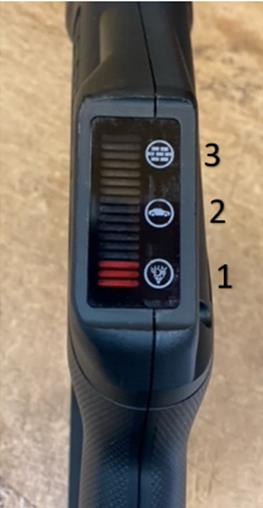
My Pressure Washers vario lance will not adjust/rotate
Quick Answer
If your vario lance is not adjusting between high and low pressure, this is usually caused by either debris trapped inside the adjustment mechanism or wear to the internal thread that controls the pressure setting.
In many cases, cleaning the lance connection will resolve the issue. If the mechanism is worn or damaged, the lance will need replacing.
Before You Start
Before inspecting the vario lance, make sure:
- The pressure washer is switched off
- The trigger is released and pressure is removed
- The lance is disconnected from the spray gun
Always:
- Inspect the lance in a clean, dry area
- Avoid forcing the adjustment ring
- Check for visible dirt or grit around the nozzle
Important: Do not attempt to adjust a stuck lance while the machine is pressurised.
Why the Vario Lance Stops Adjusting
Common causes include:
- Dirt or debris trapped in the adjustment ring
- Worn or stripped internal thread
- Mineral build-up from water deposits
- Over-tightening or excessive force during use
How to Fix a Stuck Vario Lance
Follow these steps:
1. Check for visible debris
Look closely around the adjustment ring and nozzle area for:
- Dirt
- Sand or grit
- Limescale build-up
2. Clean the adjustment area
- Use the nozzle cleaning pin to gently clear around the connection points
- Rinse the lance with clean water
- Gently move the adjustment ring while cleaning
3. Test the adjustment ring
- Rotate the lance between pressure settings
- Do not force it if it feels stiff or stuck
Tip: Small debris is often enough to stop the mechanism moving smoothly.
If the Lance Still Will Not Adjust
If cleaning does not resolve the issue:
- The internal thread may be worn
- The adjustment mechanism may have failed
In this case, the vario lance will normally need to be replaced.
Replacement Options
- If your machine is within warranty, a replacement vario lance can be supplied free of charge
- If your machine is out of warranty, a replacement vario lance can be purchased via our website
Replacing the lance will usually restore full pressure adjustment functionality.
Important Maintenance Tips
- Regularly rinse the lance after use to prevent debris build-up
- Avoid forcing the adjustment ring if it becomes stiff
- Store the lance clean and dry after each use
- Use the nozzle cleaning pin to prevent blockages forming
Frequently Asked Questions
Why won’t my vario lance adjust?
This is usually caused by debris in the adjustment mechanism or worn internal threads.
Can I fix a stuck vario lance?
You can often clean it using the nozzle pin and water, but worn internal parts cannot usually be repaired.
What happens if I force the adjustment ring?
Forcing it can damage the internal thread and make the issue permanent.
Do I need a replacement vario lance?
Yes, if cleaning does not restore adjustment, the lance will normally need replacing.
Is a replacement covered under warranty?
Yes, if the fault occurs within the warranty period, a replacement can usually be supplied free of charge.
View ArticleSnow foam fitting on your pressure washer
Quick Answer
We do not supply or stock snow foam fittings or accessories for pressure washers. As a result, we are unable to provide installation guidance for these items. We also do not recommend using snow foam attachments on machines that are not specifically designed or manufactured for this type of accessory.
Availability of Snow Foam Accessories
Snow foam fittings are not available through our product range. This includes:
- Snow foam bottles
- Snow foam lances
- Third-party foam attachments
Frequently Asked Questions
Do you sell snow foam attachments?
No. We do not supply or stock snow foam lances or fittings.
Can I fit a snow foam bottle to my pressure washer?
We do not recommend fitting snow foam attachments to our pressure washers unless the product is specifically designed for that use.
View ArticleHow do I start and set up my Patio & Wall Cleaner
Quick Answer
To set up your patio and wall cleaner, assemble the tube sections securely, attach the unit to your pressure washer gun using the correct adaptor, and ensure all connections are tightly fitted. Once connected, you can begin cleaning by moving the unit in smooth, straight passes across the surface, adjusting pressure using the top control dial.
Before You Start
Before assembling or using your patio cleaner, make sure:
- The pressure washer is switched off
- All components are dry
- You are wearing suitable PPE if required
- The working area is clear of obstacles
Always:
- Inspect the patio cleaner for cracks or damage
- Ensure all fittings are clean before connecting
- Check compatibility with your pressure washer model
Important: Do not connect or disconnect any parts while the system is pressurised.
Specifications
This patio and wall cleaner is designed to operate within the following limits:
- Maximum permissible pressure: 15 MPa
- Maximum inlet water temperature: 60°C
- Recommended operating pressure: 90–150 bar
Important: Using the cleaner outside these limits may affect performance or cause damage.
How to Set Up the Patio & Wall Cleaner
1. Assemble the tube sections
- Connect all tube parts together
- Push each section firmly into place
- Twist to lock securely
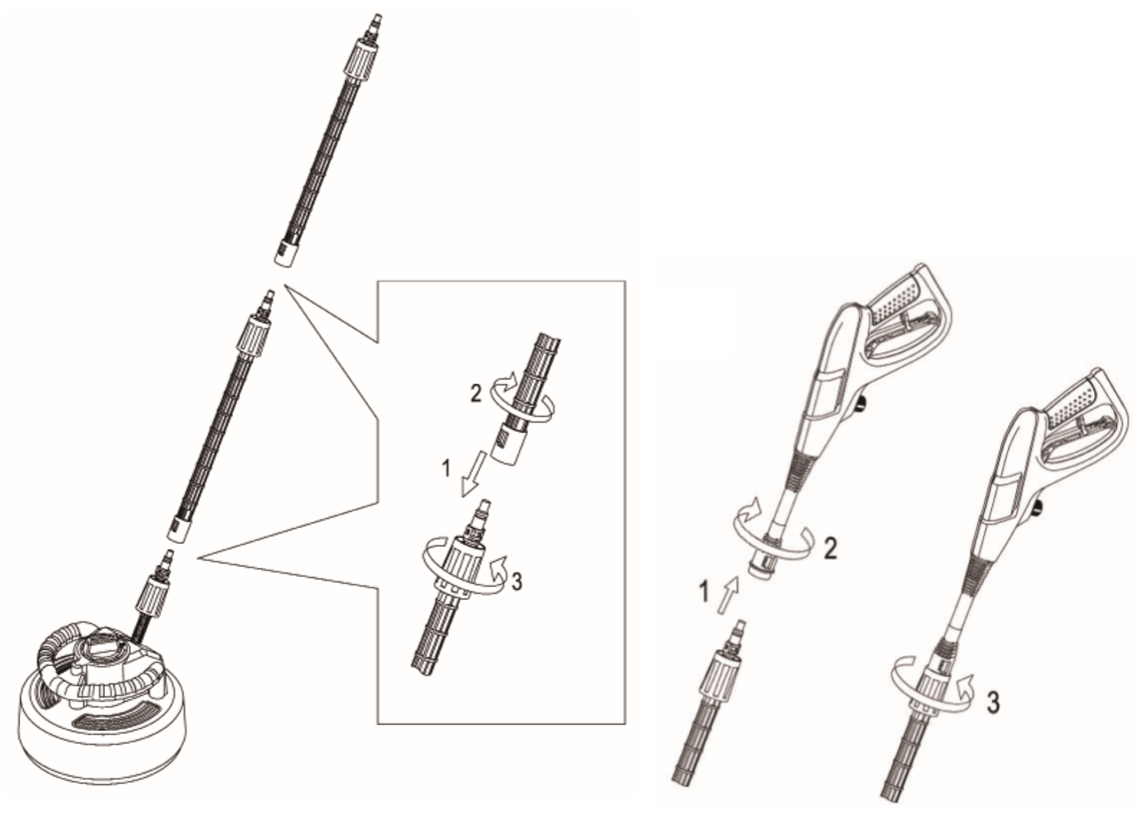
Tip: Ensure each section is fully seated before moving on.
2. Attach tubes to the cleaner head
- Push the assembled tube into the cleaner unit
- Twist until it locks securely in place
[Insert image of cleaner head attachment]
3. Connect to your pressure washer gun
Depending on your model:
Workzone pressure washers:
- Insert the top of the extension tube into the spray gun
- Twist the gun clockwise and tube anti-clockwise until secure
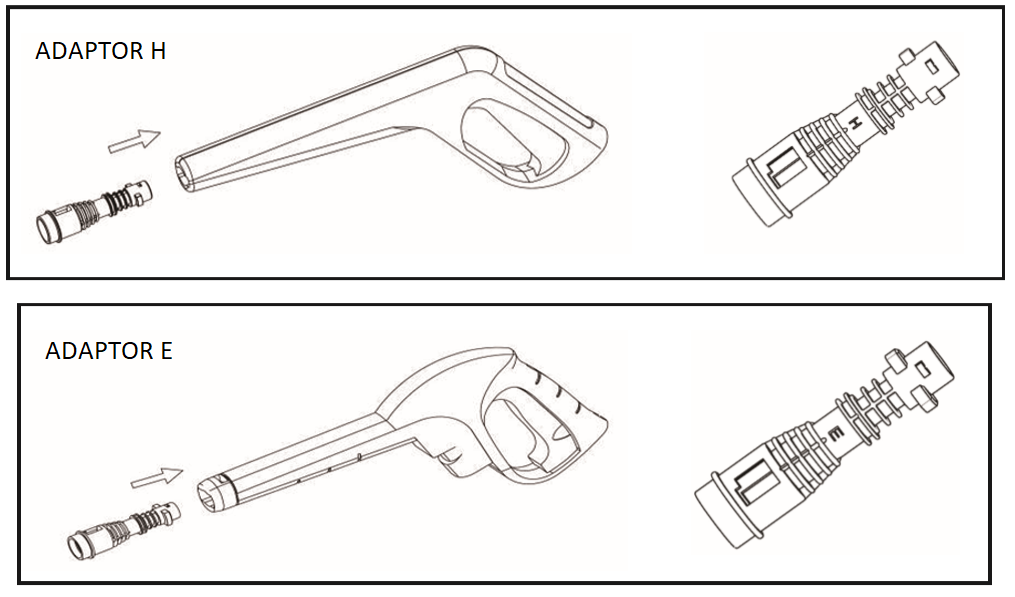
Non-Workzone pressure washers:
- Use adaptor E for common DIY spray guns (up to 150 bar)
- Use adaptor H for compatible Workzone/DURA models (post-2012)
- Ensure the correct adaptor is firmly fitted before use
How to Start Using the Patio Cleaner
Once assembled and connected:
- Place the cleaner flat against the surface
- Start the pressure washer
- Move the unit in straight lines, either:
- Up and down
- Left and right
Avoid circular movements for best cleaning results.
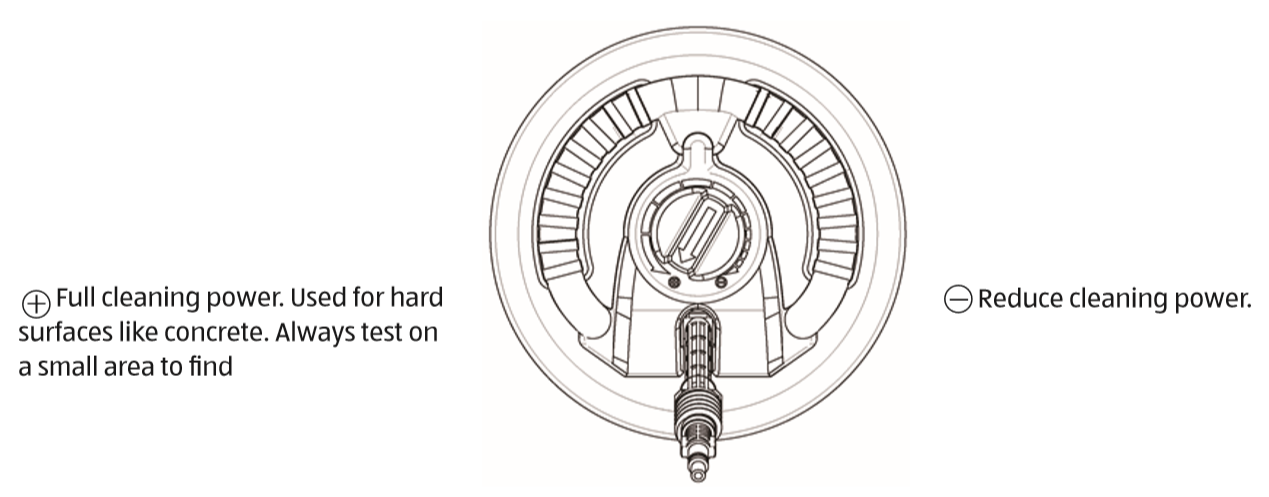
How to Adjust Cleaning Power
The top dial controls cleaning intensity:
- Turn clockwise to reduce pressure
- Turn anti-clockwise to increase pressure
Adjust gradually until you reach the desired cleaning effect.
Important Safety Measures
- Always check for damage before each use
- Do not handle wet electrical connections
- Keep hands away from spray area during operation
- Ensure all connections are secure before starting
- Never exceed recommended pressure limits
Frequently Asked Questions
Why won’t my patio cleaner connect to my pressure washer?
This is usually due to using the incorrect adaptor or an incompatible gun type.
Can I use the patio cleaner at full pressure?
It should only be used within the recommended 90–150 bar range to avoid damage.
Why is my patio cleaner not spinning properly?
This can be caused by low water flow, trapped air, or incorrect pressure settings.
Do I need an adaptor?
Yes, depending on your pressure washer model, either adaptor E or H may be required.
How should I move the patio cleaner when in use?
Always use straight-line movements for the most even and effective cleaning result.
View ArticleMy Patio & Wall Cleaner has stopped spinning
Quick Answer
If the cleaning arm on your patio and wall cleaner has stopped spinning, this is usually caused by the central spindle becoming stiff or seized due to a lack of lubrication.
In most cases, applying a suitable lubricant will restore normal movement.
Before You Start
Before inspecting or servicing the patio cleaner, make sure:
- The pressure washer is switched off
- The unit is fully depressurised
- The cleaner is disconnected from the spray gun
Always:
- Place the unit on a stable, dry surface
- Check for visible debris around the spinning arm
- Ensure all moving parts are free from obstructions
Important: Never attempt to manually force the spinning arm while the machine is pressurised.
Why the Patio Cleaner Stops Spinning
Common causes include:
- Dry or insufficient lubrication in the spindle
- Dirt or debris restricting movement
- Build-up from dirty or hard water
- Lack of regular maintenance
How to Fix a Stopped Spinning Patio Cleaner
Follow these steps:
1. Check for debris
Inspect the underside of the cleaner for:
- Dirt
- Stones or grit
- Blockages around the spinning arm
Remove any visible debris carefully.
2. Lubricate the central spindle
- Locate the central spindle beneath the unit
- Apply a small amount of multi-purpose grease or suitable lubricant
- Rotate the spindle gently by hand to distribute the lubricant
Tip: Do not over-apply lubricant, a small amount is sufficient.
3. Test the spinning motion
- Reconnect the cleaner to the pressure washer
- Run water through the system
- Check that the arm spins freely under pressure
Important Maintenance Tips
- Regularly clean and rinse the patio cleaner after use
- Apply light lubrication periodically to prevent seizing
- Avoid using the cleaner on heavily debris-covered surfaces without pre-rinsing
- Store in a dry environment to reduce corrosion risk
If the Problem Continues
If the arm still does not spin after lubrication:
- The spindle may be worn or damaged
- Internal components may be seized or corroded
- The unit may require replacement
In this case, please contact our support team via live chat or raise a support ticket with your model details.
Frequently Asked Questions
Why has my patio cleaner stopped spinning?
The most common cause is a dry or seized spindle due to lack of lubrication or dirt build-up.
Can I fix a non-spinning patio cleaner myself?
Yes, in most cases applying multi-purpose grease to the central spindle will resolve the issue.
How often should I lubricate the spindle?
It is recommended to lubricate periodically, especially after extended use or storage.
What lubricant should I use?
A standard multi-purpose grease is usually suitable for restoring smooth movement.
Is it safe to keep using it if it is not spinning?
No. Continued use without spinning can reduce cleaning performance and may strain the internal components.